What might happen to mobile service in Greece should there be default against IMF, ECB, and debt
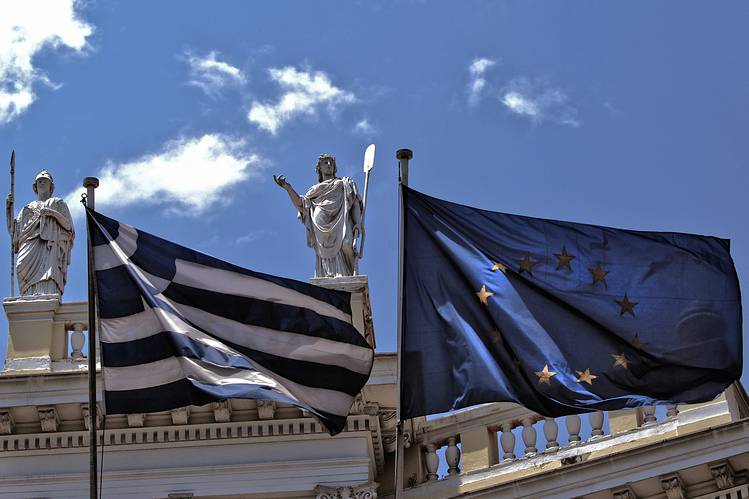
Photo credit European Press Agency
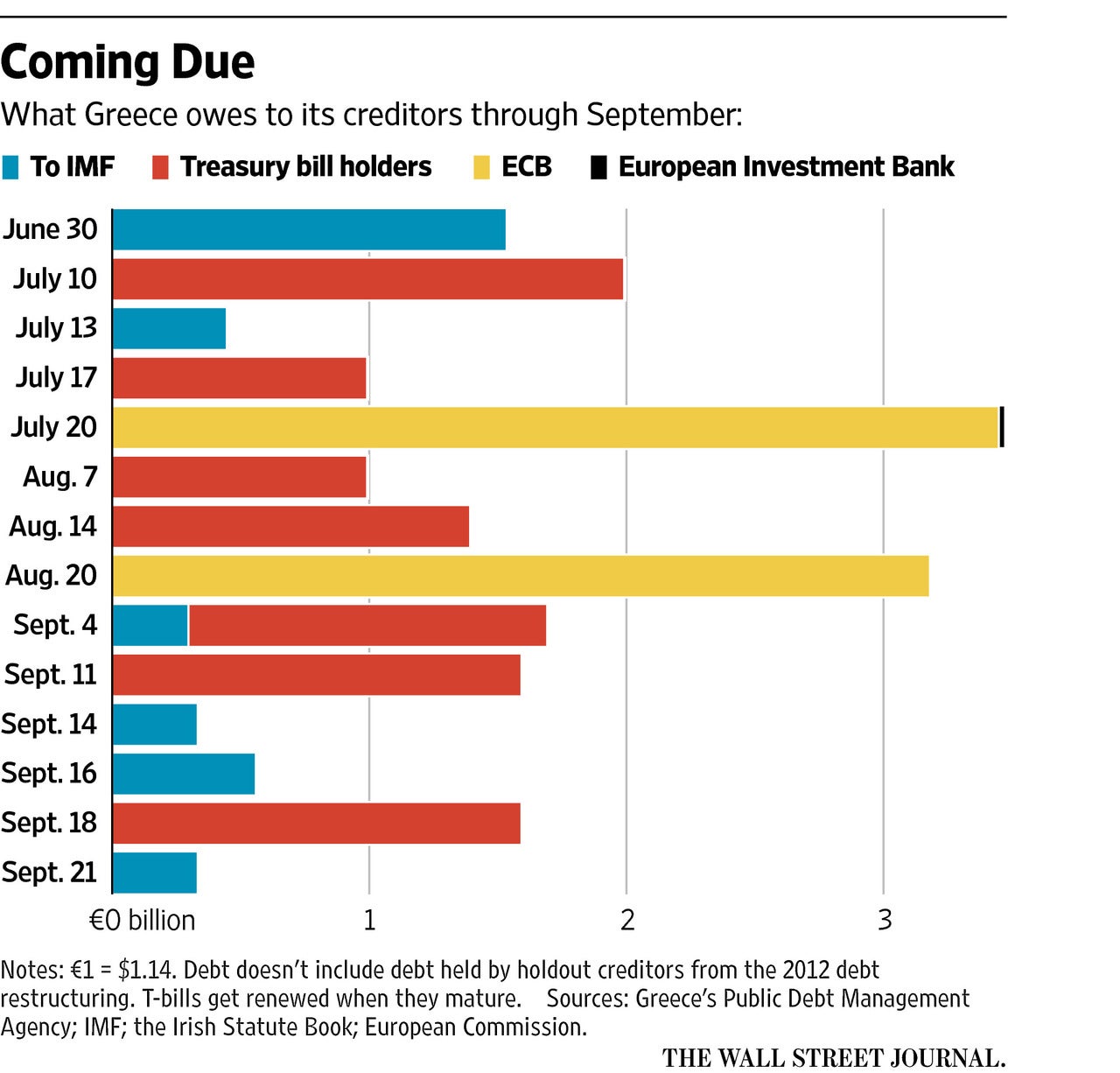
Just in case you are not up-to-date on the news, Greece is in big trouble. While its debt-to-GDP ratio is second only to Japan, the latter has a much larger economy that continues to grow. Unfortunately, decisions and actions taken over generations are finally catching up with Greece.
With continued contractions in the economy, near 30% unemployment, and what may be a beginning of an all-out run on banks this week, there are a number of challenges everyday people are facing.
If that were to happen, what would be the fate of things that have become as natural to consumers’ lives as breathing, like wireless service? In the immediate term, nothing. However, in the short-term, it may be difficult to transfer funds to pay the bills if Greek banks put a choke hold on distributing monies that could potentially leave the country.
The carriers
Not accounting for Cyprus, Greece has three major mobile service providers, Cosmote, Vodafone, and Wind. Cosmote, with about 7.5 million subscribers, is a wholly owned subsidiary of OTE, the primary telecommunications company in Greece. OTE is 10% owned by the Greek government and 40% owned by Deutsche Telekom.
The three primary mobile providers in Greece
The crisis
Will Greece’s mobile and landline networks go dark if the country fails to come up with a plan? Not entirely, but the resulting constrictions on cash flow would ultimately have an impact on service. While no one is forecasting service to go down, it could very easily increase in price, dramatically.
The ripple effect is easy to follow. If you, the consumer, are limited in how much money can be withdrawn from your account for any reason, that obviously may be a factor in how you are able to pay the bill. If you cannot pay your bill, you lose service.
For businesses, the inability to cash-flow operations, or even access credit facilities that are commonly used to fund capital expenditures, meet payrolls, ad infinitum, the result will certainly involve furloughs, and layoffs, further resulting in degraded service and ability to collect on receivables. Without the ability to pay employees or pay for products to maintain service, network performance will be affected, and some sites could conceivably go down.
If there is a “Grexit”
There is little perceived upside if Greece were to leave the euro currency and return to the drachma (or whatever it would call its currency). Inflation would be an immediate concern, with on-going devaluations which means a mobile service bill will rise on two fronts, one being the devalued currency, and the other being on devalued assets coupled with increased costs to acquisition and maintenance.
Evi Pappa, an economics professor at the European University Institute in Florence, Italy, believes that if Greece manages to implement a new currency, devaluations will be frequent, and steep, at least 50% per adjustment. That means a basic plan on Vodafone Greece, normally €21.50 would cost in excess of 10,000GRD per month after just one devaluation adjustment.
Some would argue that inflation is simply another form of valuation, so if a person was making €40,000 per year in a job, that would magically equate to 13m-GRD (before devaluation) and keep pace with inflation, thus maintaining purchasing power. That is not the case however.
Nothing is certain
If there is anything we have learned over the past few years of the Euro-zone dealing with the Greek financial situation, it is that at least up to now, the money people on all sides have been able to avert serious problems with semi-last-minute arrangements.
Those that compare Greece’s circumstances to Argentina’s of a decade ago are overlooking that Argentina has its own currency, and before things started getting better, the banks were literally boarded-up with people banging on the doors with pots and pans.
For now, there will be another meeting on Monday. Greek Prime Minister Alexis Tsipras and German Chancellor Angela Merkel will be the main figures, along with a cast of other ministers and bankers. Politically, there is positioning to see if one side or the other will blink on a given issue.
references: The Wall Street Journal, The New York Times, Al Jazeera


Popular stories

Latest News

Things that are NOT allowed:
To help keep our community safe and free from spam, we apply temporary limits to newly created accounts: